Mark Lloyd is CEO of The Rivers Trust – the umbrella organisation for 65 Rivers Trusts across the UK and Ireland. A leading influence behind the development of some crucial elements of The Environment act, he talks to Alastair Chisholm about the state of our rivers, pushing and working with the water industry, and where we need to go next.
How long have you been with The Rivers Trust and what are you trying to achieve there?
Mark Lloyd joined The Rivers Trust (TRT) in September 2019 after a decade leading the Angling Trust and Fish Legal and previously as the founding CEO of Thames21, a Rivers Trust in London. In 2019, the Rivers Trusts’ collective annual turnover was roughly £20 million per year and Lloyd recognised a lot more was needed to achieve their vision for cleaner, healthier rivers. He set a strategy to grow funds considerably – to £100 million annually by 2025 – which they’re well on the way to achieving.
TRT is fundamentally a grass roots – or what Lloyd terms as “wet feet” – organisation focused on delivering improvement in-and-around our rivers. He knows it will take way more than £100m/yr to get anywhere close to their target of thriving rivers and local communities in-touch and well-engaged with those. So collaboration is embedded within the organisational DNA. “We have to gang-up on problems” he says and, because TRT unlike other major conservation bodies doesn’t own any land, they always have to work consensually with landowners.
Since he joined, that funding flow hasn’t just grown appreciably, it’s changed in its source. “With the decline of government funding and – post-Brexit – EU monies, we’re having to look to the private sector for more support. It’s a big focus and increasingly involves the water companies.”
“The narrative of rivers being cleaner than at any time since the industrial revolution just doesn’t stand up to scrutiny and river health is very complex to measure.”
The state of our rivers
River health is hot news with a raft of mainstream media channels running campaigns on the issue – borne mainly of the scandal over sewage pollution and the decline of some nationally-beloved rivers due to intensive farming impacts. Yet up until recently the narrative from government and bodies like the Environment Agency was one of recovering rivers and returning keystone species.
“The narrative of rivers being cleaner than at any time since the industrial revolution just doesn’t stand up to scrutiny and river health is very complex to measure. There are hundreds if not thousands of new chemicals we just don’t know the impact of. In some ways things are better (there are far fewer direct industrial effluent discharges) so urban rivers and estuaries like the Tyne, Mersey and the Thames (when the Tideway ‘super-sewer’ becomes operational) have improved following the Urban Wastewater Treatment Directive. But, other rivers have declined and broadly it’s a very concerning picture.
“Some important chemicals like neonicotinoids we don’t monitor for, but we know they’re there. In rural areas the picture’s got progressively worse due to agricultural intensification.” And in urban areas some aspects have got worse, particularly diffuse pollution from hard surface runoff.
Fundamentally Lloyd says, it’s about data. “We need more data in greater resolution so we can understand exactly what’s going on. Then we stand a chance of building greater consensus and being able to manage it”. That’s a key principle behind TRT’s conviction to empower and unleash citizen science by training volunteers to go out and monitor the health of their local rivers.
“It was the beginning of the decline of effective regulation, which was caused by budget cuts and a loss of political will”
The state of the water sector
The water sector is enduring arguably its most acute bout of public unpopularity, at least in recent memory. Following the publication of storm overflow discharge frequency data, campaigner and media scrutiny of sewage pollution alongside financial behaviours, record pollution fines and the summer 2022 drought, there’s been no shortage of ammunition launched in companies’ direction. Yet the water industry has to be front and centre of delivering solutions to the climate and nature crises and will need the public on-side to enable it to do this effectively.
Lloyd feels the advent of operator self-monitoring 10-12 years ago was when the rot set in. “It was the beginning of the decline of effective regulation, which was caused by budget cuts and a loss of political will to stand firm on environmental protection at a tough time for the economy.”
This, he says, resulted in two things: Firstly companies no longer felt the regulatory pressure to invest in infrastructure upgrades and maintenance in certain areas. They could sweat their assets. Secondly, some companies recognised the scope to push the envelope on compliance to maximise financial performance, in some instances knowingly polluting to this end. “Once these behaviours by one or two companies have been found out, it’s very hard for the whole sector to recover its reputation” Lloyd warns.
That the public have been largely unaware of these issues until recently isn’t because campaigns around pollution and river health hadn’t been in existence for decades.
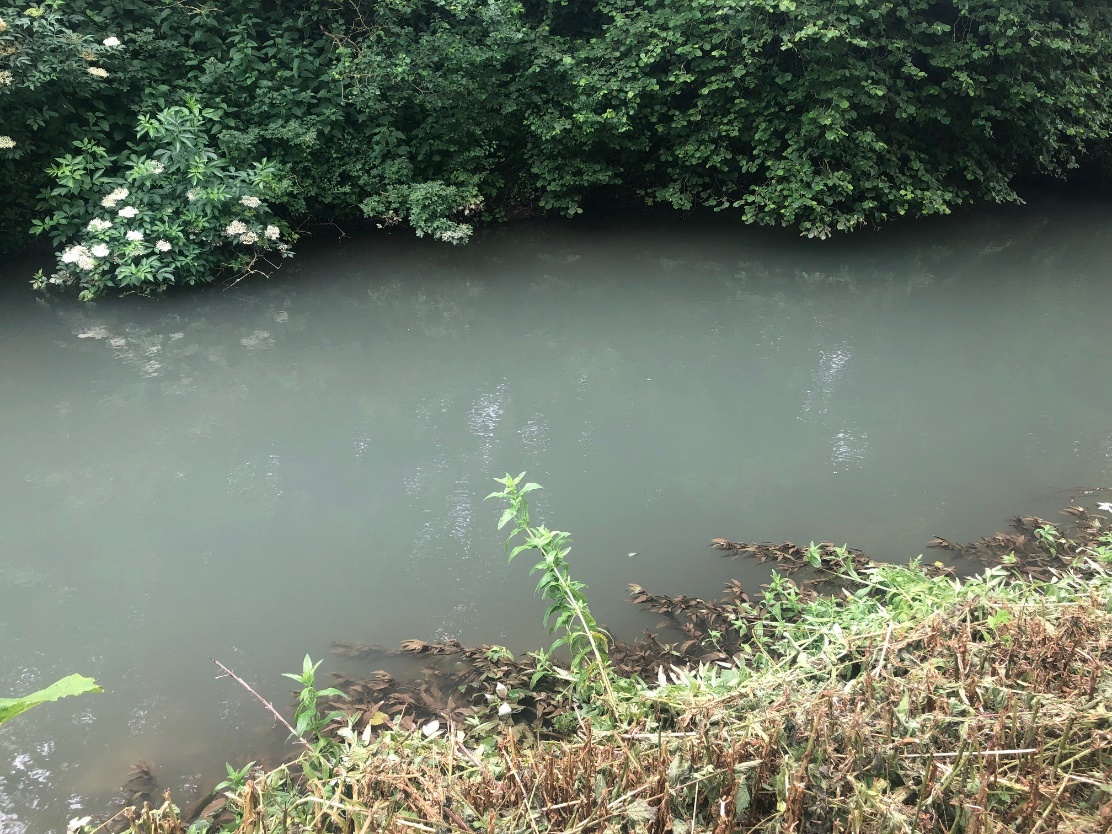
But event duration monitor data allied to social media-savvy campaigners have given the issues huge amounts of oxygen at a time when the industry, policymakers and regulators had become complacent: “Good water management is a nettle we haven’t grasped when we needed to. Decision-makers and water companies have kicked the can down the road and kept building housing and maintaining assets in a way we’ve known isn’t sustainable. Now we’re at that point of reckoning, we have to accept and face up to that.”
I ask how the sector begins to recover from such a nadir. “Transparency” Lloyd asserts. “And leadership rooted in honesty. If you want to be trusted, be honest and open.”
He describes a situation when working at a previous organisation they fought a legal case to make water companies subject to the Environmental Information Regulations. “It was a real struggle and it just shouldn’t have been. These are companies delivering an essential public good; they should be open-book.” This is particularly so if we’re ever to move in a meaningful way towards outcomes-based regulation he argues, because the public will need assurance that water companies are properly playing their part in that.
Honesty from politicians is the other area for improvement Lloyd says is essential. TRT played their role in pushing for measures on storm overflows to be included in The Environment Act 2021 and he welcomes the targets it sets, even though they could have been more ambitious. But he says there’s been too much political posturing, bashing water companies when the responsibility for systems failure should be more widely shared. He argues the business-as-usual model of barely-regulated intensive agriculture and development ignores the scale of change needed: shouting at water companies grossly over-simplifies a complex and chaotic water governance landscape and deflects attention away from the government’s policy failures to get to grips with pressing nature and climate challenges.
“These are companies delivering an essential public good; they should be open-book.”
Regulating for outcomes and the long-term
An emerging picture is one of water companies responding to the Environment Act and the plans feeding into PR24 in a risk-averse, compliance-first way, which feels very concrete – and carbon – heavy.
I ask whether the e-NGO community which drove such an energetic campaign on sewage and overflows in the Act might regret how things have developed since, and whether there are lessons to be learned from such an overt emphasis on overnight improvement.
Lloyd believes that people got very angry when they found out what was happening in their local rivers and coastal waters and understandably wanted an instant response and felt that the water companies were solely to blame. The government response has reflected this by focussing on regulating companies more tightly and talking tough.

That approach has ended up with a situation driving micromanagement of all overflow sites. He warns a similar thing could be happening in the way nutrient neutrality is being approached in the Levelling-up and Regeneration Bill now, with government’s overt focus on sewage treatment works upgrades as the solution. Although investment in treatment will clearly play a key role in any solution, a wider, more outcome-based approach would be a better use of resources and could achieve results more rapidly.
“Because the level of trust doesn’t exist for an outcome-based approach, it makes it harder to take a systemic approach and you get drawn into putting everything into one basket in terms of solutions, he laments. “One of the reasons some cost-estimates for cleaning-up storm overflows were so high was because ministers were missing the range of interventions, and sources of funding, that should be brought to bear on the problem. Concrete-pouring and chemical-dosing may achieve results relatively reliably, but it misses the opportunity to deliver a wider range of outcomes.”
But the timing of how new law has fed into the latest water industry business planning round has massively exacerbated the challenge in being incredibly tight for companies to respond to, Lloyd believes. “It’s a terrible way to run a multi-billion pound industry and provokes a response which prioritises risk-minimisation against outcome maximisation.”
All that said, Lloyd is genuinely encouraged that the guidance informing the latest company plans is prioritising nature-based solutions and collaborative working. But for now, he believes the reality is that the regulatory framework isn’t set up for that yet and still regulates to minute performance targets. “The regulators are shouting from the bridge to turn right but gripping tightly onto the wheel and preventing the ship from actually turning.”
He acknowledges that at least the rhetoric is there and things should progress in the right direction. But he thinks it’ll take time and we’ll probably have to wait another planning cycle to see real change. While the tanker turns, he notes that it’ll allow the opportunity for ongoing investigation on pollution and performance by the Environment Agency, Ofwat and the Office for Environmental Protection to shine a light on what’s happened and what has to change.
“The regulators are shouting from the bridge to turn right but gripping tightly onto the wheel and preventing the ship from actually turning.”
A vision of the future
So where are things pointing and what could be achieved with some recovered trust in the sector to unlock the art of the possible? Lloyd believes that with some of the change he’s pointed to so far there’s potential to unleash a huge financial war chest on environmental recovery if it can be harnessed, directed and amplified in the right way.
Water companies are currently spending about £1 billion per year on measures directly targeted at improvement to the water environment. That’s likely to grow considerably from 2025 as storm overflows remediation investment and other new requirements come on-stream.
That quantum of investment means that whatever the public perception of them, water companies are a very big part of the solution. The art of the possible is that if that money can be coordinated alongside the billions that go into flood risk management, agriculture, biodiversity net gain, corporate social responsibility, net zero and more we could just unlock something genuinely transformational that delivers on the environmental recovery that government pledges in its Environmental Improvement Plan.
But coordination is critical to this ever happening and it’s a fundamental thing Lloyd feels is missing in how land and water are currently managed. TRT have advocated for an added layer of governance which would enable the strategic coordination of investment according to regional and local need.
However that coordination might be configured, water companies would almost certainly be central actors and could play a very large role in a public-private partnership delivery of a clear strategy for recovery, Lloyd believes. “We’ve seen the beginnings of it in the partnership work done between some of the companies and Catchment Partnerships” he says, namechecking Northumbrian Water. “They’ve set out plans feeding into their water industry national environment programme to maximise scope for community collaboration and to unlock additional match-funding. “It keeps their customers and stakeholders happy and is a really exciting glimpse of a possible future. But it needs a proper governance framework.”

Lloyd is aware of criticisms levelled at TRT by some in the campaigner community that the Trust is getting too cosy with water companies to be credible in holding them to account. But he’s comfortable with it, he says because in practice they never shy away from calling out poor behaviour, they back up their arguments with good evidence and they’re always solutions-focused.
He points again to the issue of trust and the need for the sector to focus back on people and communities-first. He says companies need to do some amazing things that are very visible to their communities if they are to be valued by their customers. Things that provide space for nature, for wellbeing, and which reduce flood risk, alongside delivering those core water utility services.
“These are the things that people notice and will give companies a clearer licence to operate. That’s fairly existential at the moment and unless companies embrace it wholesale they’ll lose that licence. But if they do take that approach – and policy and regulation enables it – they can rebuild faith and trust.
Lloyd leaves with a parting comment: in his experience of working with people in water companies, he’s found the vast majority of the individuals to be equally passionate about the health of the environment as any NGO employee or campaigner. They just work for a water company under different – and often quite challenging in the current climate – constraints. He says the same goes for the staff in regulators, and that recognition of common ground will be crucial to future success on water.