


John Curtin is Chief Executive of the Environment Agency*. Alastair Chisholm and Niki Roach caught up with him at Flood and Coast 2023 and chatted the future on everything from sewage to sea level rise. Curtin emphasised the importance of collaboration and set out the alarming reality that keeps him awake at night.
A fresh water future?
Last year, Curtin’s predecessor Sir James Bevan said we need a complete gear change on water management. With CIWEM asking sector leaders about “a fresh water future” what’s Curtin’s take on this?
“I agree we need that change. With pressures of climate change and population growth on water you need a strategy – a north star. The launch of government’s integrated plan for water is potentially the start of that. The launch zeroed in on wet wipes but beyond the headlines I said this was my equivalent of a water Christmas; it’s the best combination of different features that we’ve had for a long time. But now of course we have to make it happen.”
Curtin emphasises that local context is going to be crucial in how we move forward. There’s a strong emphasis in the plan for water on integrated catchment management. The challenge he says will be how to effectively pull the different strands of that together in different ways, in different places. “It will look quite different in the uplands of Cumbria to in South London rivers so plans for those catchments will need to recognise local needs, sense of place, involve local authorities and include local communities.”
If we do need a transformation it seems that the public could be right behind that and receptive to change given the level of media focus on river health, water company performance and the impact of intensive agriculture on places like the River Wye.
Curtin points to the Office of National Statistics (ONS) quarterly public opinions trend as a barometer of how high levels of concern are on the environment right now. The most recent one showed climate change and the environment being right up there amongst the issues of most concern, fourth in the priority list. Unsurprisingly cost of living topped it but the environment ranked higher than education, crime and international conflict.
“Historically concern and traction on the environment has tended to coincide with when the economy’s been strong. People thought in those conditions we could afford to invest in the environment but when the economy got tough we couldn’t have all the green stuff.
“Now of course we’re in difficult economic times but people still want action on the environment and climate. The last ONS survey also looked at what people thought about their career and how connected to the environment it was. About 20-30 percent of people said they had some kind of climate or green aspect to their job and were proud of that.”
Curtin notes all the recent discussion over penalties and fines and says it’s essential polluters do really feel the pain when they harm the environment. But, he says, long-term that’s not the answer and greater appreciation of the value of water across the board will be crucial. He also cautions against focusing on current water quality challenges at the expense of other major issues and says we need to look outside our immediate horizons to how others are managing water pressures, like on flood and drought.
“Other countries are already living our climate future so we should be looking at what they’re doing in response and building that into our plans and approaches to infrastructure, agriculture, regulation and so-on. We know what’s coming at us, we need to get ready for it.”
“Here’s a controversial thing: Some water companies do really good stuff on the environment”
Collaborative working and the issue of trust
With increasing emphasis now on taking catchment-scale working to a new level, the question of how this is organised and coordinated is one that various organisations and individuals in the water sector have expressed positions on. The concept of a ‘catchment system operator’ has gained traction with Prof. Dieter Helm the highest profile advocate. We ask what role the Environment Agency might play in that kind of approach.
“Dieter’s thesis has someone – an entity – controlling resources. One thing I learned from working on flooding was the power of convening people. We need people convened around local place in the catchments and the EA could certainly play a key part in that convening. We’re evidence and data-rich and could use that to show the pressures and demands on any given catchment and the solutions available to manage them.”
Curtin points to his flood experience again, noting there are potentially 80 or 90 groups who might come together to make a more resilient community or place.
He argues that rather than one entity having all the money and power to make the decisions, there’s a need for someone who can effectively convene people to take decisions collectively.
Going back to the plan for water, he says the biggest challenge right now is trust. “So much has been lost and we need to rebuild that so we have the ability to engage all the right people in a way that’s grounded in trust. The recent Water UK announcement was clearly an attempt to start that rebuild but there’s a long way to go”.
He says what worries him the most is how toxic the water debate is becoming when there’s so much need for a blended view on everything, to chart a way forward on nuanced and wide-ranging issues.
“Here’s a controversial thing: Some water companies do really good stuff on the environment and I’m worried that every time a water company does something good, every time a river trust works with a water company they get batted down. That erosion of people doing great things on the environment ultimately means we’ll all lose.”
“Obviously I talk to EA employees. I love the EA; there are 12,000 passionate people in the organisation who get up in the morning to make a positive difference to their local environment. Sometimes when you see the social media commentary you think “you’ve just not met these people”. It’s a lazy approach and it’s not reflective of reality and it’s really eroding their morale and their passion.”
Curtin says there’s a need to channel the current concern for healthy waters into something far more constructive because most people – the public, campaigners, water companies, farmers, EA staff – are actually all pretty much on the same page.
“If the public think climate and the environment are that high up the priority list of issues then we’re all pretty aligned. Now we need to stop expending our energy on rubbing each other up the wrong way and channel it into solutions we all buy into.”
Working with nature
A recent episode of Planet Possible visited the Spains Hall estate in Essex to look at the range of nature-based solutions (NBS) being implemented on a large farm. NBS featured strongly at Flood and Coast too and there’s been a real uptick in the level of ambition to achieve the potential of this approach in recent years. Curtin agrees.
“There’s massive opportunity to go bigger. To illustrate, look back at the journey we’ve been on with natural flood management. That used to be the thing you did when you couldn’t do anything else. You’d try and do a big hard engineered flood scheme first. If you couldn’t do that you’d look at individual property resilience. If you couldn’t do that, then it would be a case of looking what else you could do around the catchment.”
He says on the Flood and Coastal Erosion Risk Management Strategy the biggest shift came in realising that resilience is built through a mosaic of different approaches at different scales and the use of – or working with – the environment is a key part of that. So the question of whether you do green or grey is pretty much a non-conversation now – you do both.
And he reiterates how that’s broken down needs to come back to a clear plan for a catchment which understands the challenges in any given place and what interventions will work to deliver the widest benefits: The right things, in the right place.
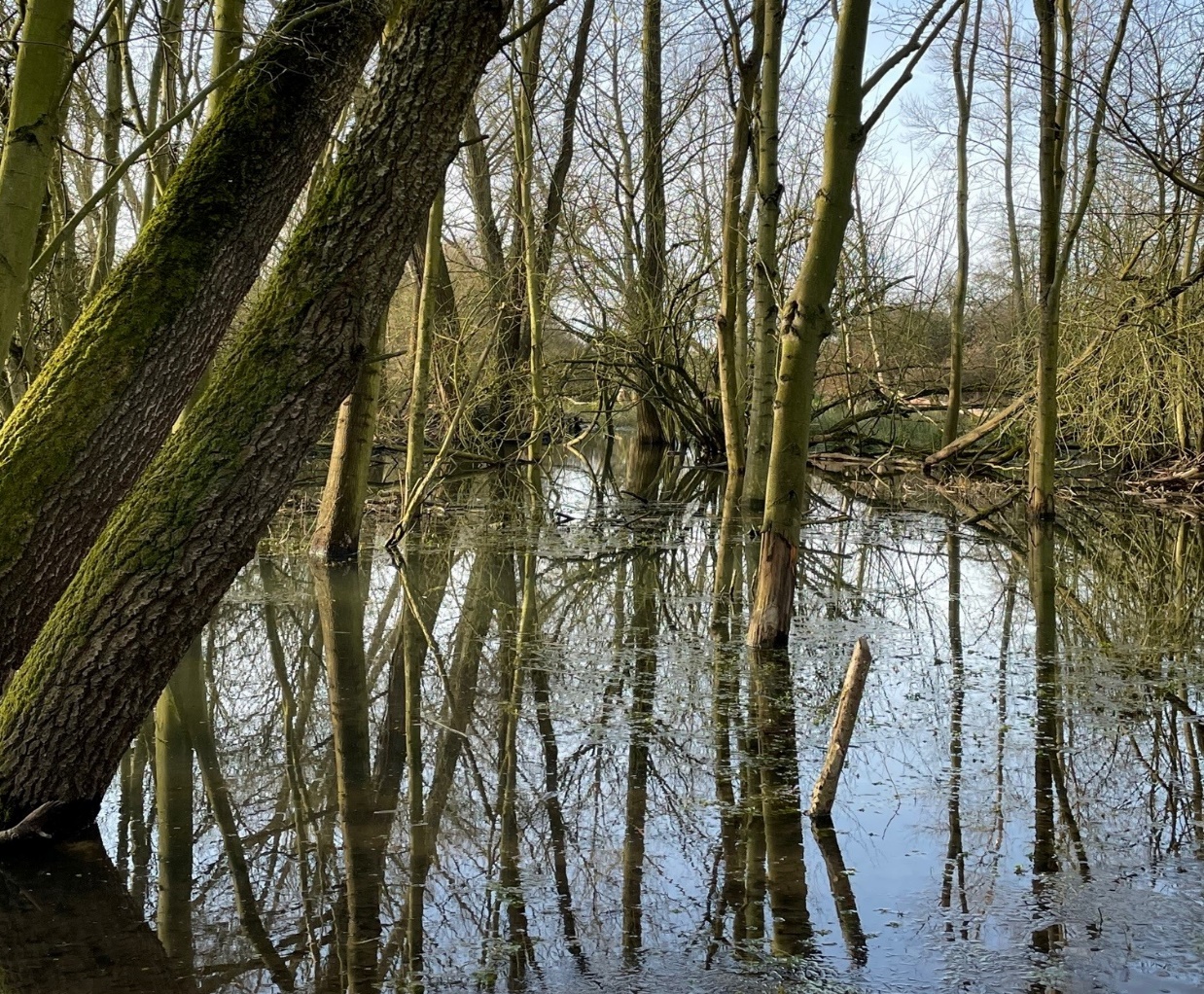
We ask whether the different objectives of different organisations always align to make this possible. Collaboration and partnership working can feel like the sector’s latest buzzwords. Curtin says that when you walk into a room you quickly realise people may have misconceptions of each other but once everyone starts talking through the issue, probably 95% of people’s objectives for the catchment actually end up being the same even if they’re coming at things from a different angle and perspective.
“Look at beavers. They’re perceived as these micro-natural flood management engineers but the time I saw the biggest impact of them was on the River Otter in the drought last summer. The drone footage of where the beavers had dammed and where they hadn’t was night and day in terms of the water availability and quality.”
“Of course there will be differences in position on things but they’re much smaller than the common ground and the gains that can be unlocked from a collective view.”
One thing with partnerships Curtin does caution on is keeping up their momentum when critical moments in time around which they’re convened – a flood or a big pollution issue perhaps – pass. It’s about not putting the burden on the passionate few and broadening out the concern and understanding of water issues amongst all stakeholders as part of a wholesale cultural shift, he argues.
“If a once in a century storm is an annual storm in 2050, what does a once-in-a-century storm look like then? We’re an island. Most of our cities are on estuaries and the coast. We’re really exposed.”
Urgency and leadership
Cultural shifts sound like one of those things it’s very easy to talk about and far harder to achieve. With so many water challenges out there at the moment – often hugely intertwined – which are the trickiest ones to crack where there needs to be the most leadership?
Curtin says that the current focus on water quality and water resources is great; they’re big issues that need to be addressed. But, he says, what keeps him up at night is sea level rise and climate change because despite changing weather patterns and records tumbling, we haven’t even really begun to experience the full impacts yet.
“There was a paragraph in a report the IPCC (Intergovernmental Panel on Climate Change) did on the cryosphere which said that by 2050, what is currently a once-in-a-century coastal storm will be an annual event. And here’s the killer line: Under all climate scenarios. That’s the future that’s coming.”
He says as someone who’s spent a lot of time working in crisis management the good news is you don’t usually get 30 years’ notice of a crisis arriving. The bad news is humans aren’t wired to deal with those longer-term issues.
From a flood and coastal risk management perspective, 2050 is only a handful of the six-year capital programmes of flood investment the EA work with, to deal with a hugely different future.
His optimistic demeanour wavers just a little. “Think about this: If a once-in-a-century storm is an annual storm in 2050, what does a once-in-a-century storm look like then? We’re an island. Most of our cities are on estuaries and the coast. We’re really exposed. We have the notice on this one, the choice is how we use that precious time.”
The question of how we actually adapt to that sobering reality naturally follows. We ask about the balance between building more defences and adapting, particularly at the community level.
Curtin says a real privilege of his job is that he gets to go and see what’s being done in other parts of the world. He explains that in developing countries in the past they haven’t had much money to build defences so they’ve put in place more community resilience.
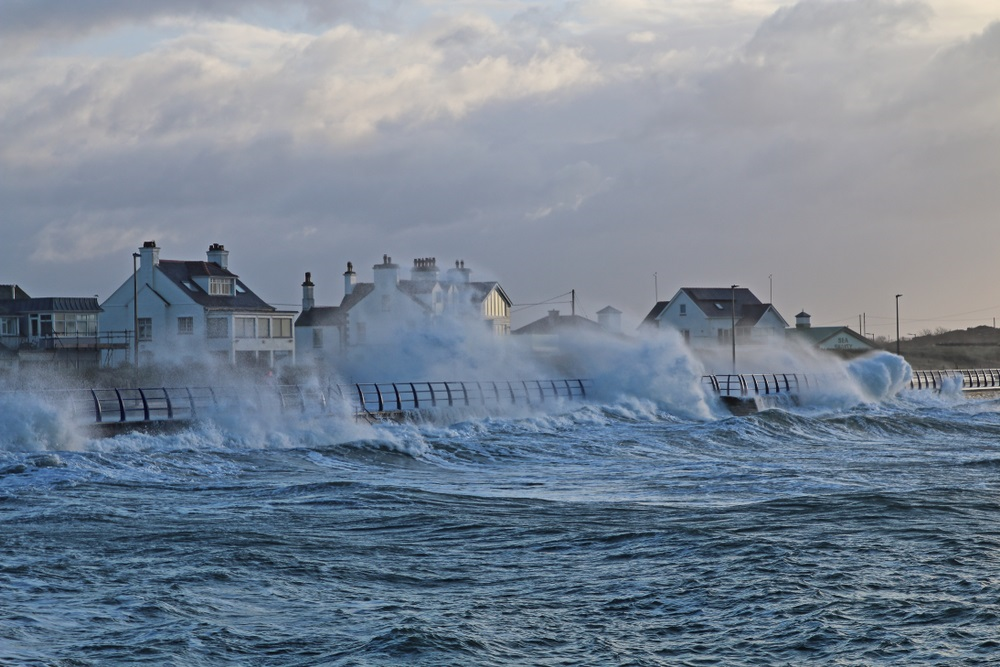
“In this country since the 1953 floods we’ve invested for decades in engineering out the risk at the expense of community resilience. I call it the ‘myth of protection’.”
He says that in the UK there is generally a higher level of protection provided to most people than in many parts of the World, but you’re never fully protected so there’s a need to rebalance investment between engineering and community resilience.
There are some difficult choices to come, he warns, and says it’s going to need bold politicians to lead a way through those. But he does think there can be a positive narrative. He tells of how on the east coast a century ago, communities used to move houses back from cliff edges every couple of years.
“It is possible. Humans have always adapted. The coast has always changed. If you think about the positive narrative that’s starting to gain traction around decarbonisation – green jobs, clean energy, clean cars and the like – we need to build a similar one around adaptation.”
So where is the leadership on the climate and nature emergency coming from, we ask? Curtin feels we’re collectively dealing with the tactical issues we face and it’s good that net zero is now an embedded concept and policy. But he doesn’t think we’ve seen the necessary strategic leadership on adaptation yet.
Unsurprisingly perhaps, he suggests arguably the strongest example of that is the FCERM strategy, which he says might be the boldest because it’s a strategy set on the generational scale.
He points to a raft of crises over recent years – a global pandemic, cost-of-living crisis, war in Europe – and says it’s understandable that government naturally focuses in on these. But as we emerge from these, we need to do what doesn’t come easily and focus on the next 30 years with real intent.
Back to the EA and its role in all this. Given the extent of climate and nature challenges these days, do we need a bigger EA? Does it need bigger teeth?
Curtin says he doesn’t necessarily think it needs to be bigger. But he says it needs to do two things.
The first is embrace innovation. He says that he had to give five speeches on behalf of Sir James Bevan before he left the EA and he confesses that the last one he wrote he used a chatbot to help.
“That was fascinating as an experience of what these things can do, but it showed we (the EA) need to embrace technology more because there’s all sorts of things it can do that we’re not making use of yet.
“We need a step forward from a digital perspective. We’re a real data-rich organisation but information-light. At the moment we don’t analyse it enough to inform what we do.”
The second area is really listening to communities and involving them. He acknowledges this is difficult and takes time, but really listening and understanding needs and perspectives is the way to build the best solutions. That, he says, is how we’ll get through the sobering reality of what we face.
*Note: John Curtin was Chief Executive of the Environment Agency April-July 2023.